Texas Raptor Conservation: A Sanctuary Built for Flight
Why Blackland Prairie Raptor Center is one of the most meaningful ways to experience wildlife in North Texas.

Ginger is one of two Eastern screech owls on Blackland Prarie Raptor Center. At just seven inches tall, she is a predator, hunting in near-darkness with razor-sharp vision and hearing. Her yellow eyes take up about two-thirds of her skull, providing exceptional low-light vision. Feathers provide camouflage: plumicorns (feather tufts) can be slicked down to blend with trees.
Ginger's home is now at the edge of the Blackland Prairie, the most endangered ecosystem in North America. The Blackland Prairie Raptor Center is a working sanctuary where birds of prey are given what the modern world so often denies them: time, space, and a second chance at flight.
Being one of the top five raptor conservation facilities in the United States and operating as a full-service raptor rehabilitation hospital, the center welcomes birds like hawks, owls, falcons, and eagles. Some animals are brought to the center after being injured by human infrastructure or by encounters with other animals. The organization works hard to ensure they get released back into the wild.
The Blackland Prairie once strecteched 23,500 square miles of Texas, a sea of tall grasses and wildflowers that supported countless species. Today, less than one percent remains. By protecting birds of prey, the Blackland Prairie Raptor Center is also protecting the invisible web that sustains North Texas itself. Raptors depend on this land. And this land depends on them. Owls control rodent populations. Hawks keep ecosystems balanced.

A Different Way to Experience Wildlife
To visit the center is to recalibrate how you understand wildlife encounters. There are no crowds pressing against glass. No forced proximity. It's an oppurtunity to understand how these animals are not here for us, we are here to learn how to coexist with them.
Blackland Prairie Raptor Center opens their facility to the public. They host year round educational, family-friendly events and welcome the public to rent the park for parties and private events.
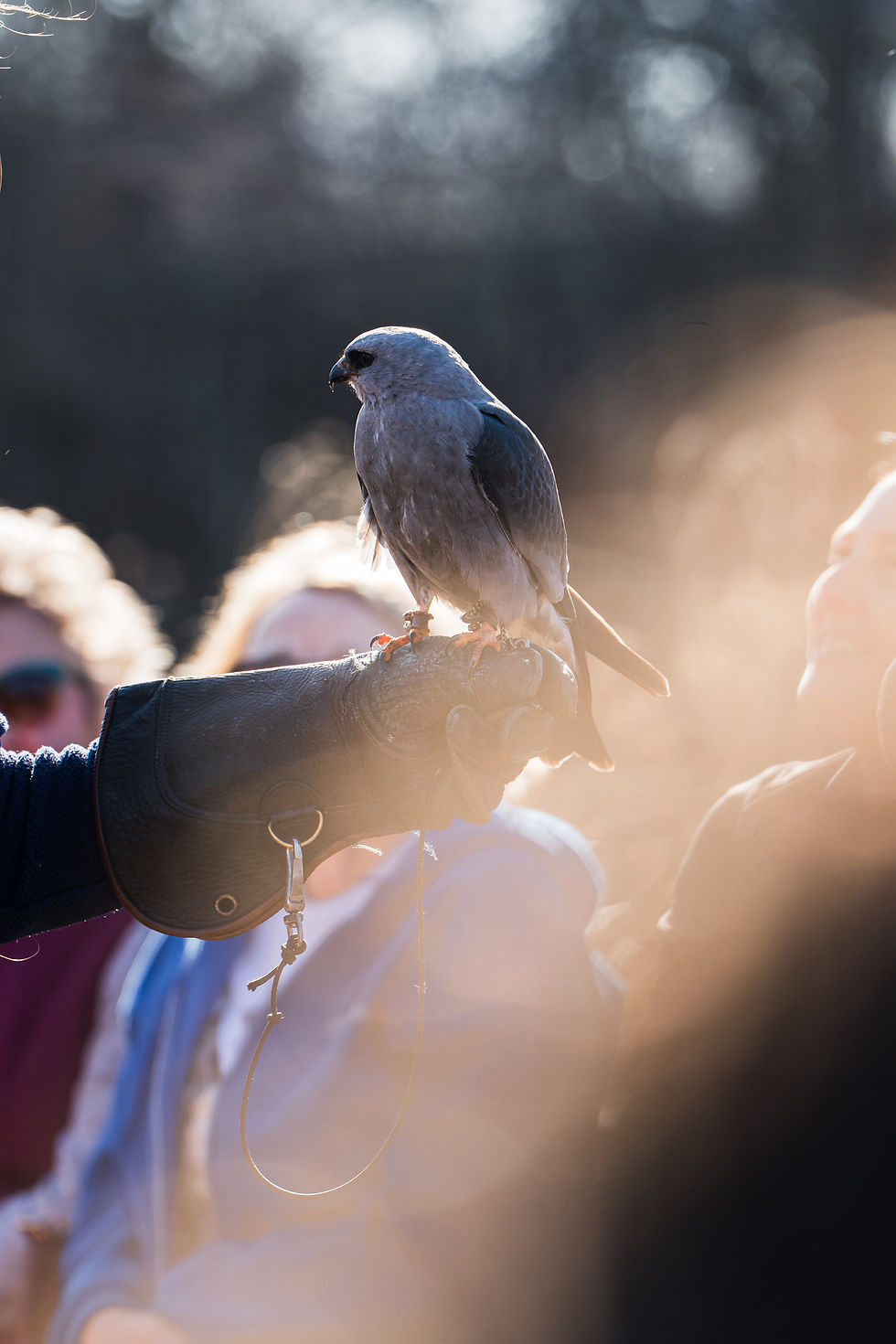
The center hosts a monthly event called "First Saturdays," featuring a live raptor program and guided trail walks. Six times a year, they hold Raptor Photo Days, a unique opportunity for registered participants to photograph the birds up close. These events begin just before sunrise for optimal lighting and last approximately two hours. Raptors are perched in natural settings, creating incredible photo opportunities. All proceeds from every event go directly back to the organization.
What's the difference between a zoo and an animal preservation?
Sanctuaries exist to care for animals that have been abused, neglected, or abandoned, often for the rest of their lives. Federal law regulates sanctuaries that exhibit animals to the public. These facilities are inspected at least annually under the Animal Welfare Act, ensuring animals have sanitary conditions, spacious enclosures, proper veterinary care, and appropriate feed. Private sanctuaries that don’t display animals, however, operate without federal oversight.
Zoos, by contrast, are created specifically to exhibit animals. They collect species based on conservation priorities, research potential, and public interest. Animals may be bought, sold, traded, loaned, or bred. Even zoos with strong educational or scientific missions face criticism from animal welfare advocates, who argue that exhibiting creatures for entertainment can exploit them.
Accrediting organizations such as the Global Federation of Animal Sanctuaries (GFAS) and American Sanctuary Association (ASA) recommend enclosures that are spacious, enriched with species-appropriate objects, and supported by a team of veterinarians. They emphasize financial stability to ensure lifetime care. The public should not roam freely, as in a zoo, but observe responsibly from a distance.
The most meaningful way to experience wildlife is not to bring it closer but to help it return home. If you are considering visiting the Blackland Prairie Raptor Center, go their website for more updates and information.
Blackland Prairie Raptor Center Website: https://bpraptorcenter.org/
Address: 1625 Brockdale Park Road Lucas, TX 75002 | Around 45 minutes outside Dallas proper
Phone Number: (469) 964-9696
Comments